How to make your home easier to sell: The ultimate seller’s guide

Quick Summary
Selling a property can be unpredictable. Finding a buyer is one thing; getting the sale all the way through to completion is another. Setting the right asking price, finding a committed buyer and getting your paperwork organised before you accept an offer are crucial to improving your chances of a successful sale. Here are our top tips for selling your home and increasing your chances of achieving the highest value possible.
1. Get the asking price right from the beginning
It can be tempting to start with an ambitious asking price on the basis that you can always reduce it later. But an overpriced property can sit on Rightmove for weeks without generating serious interest.
The first few weeks after listing are particularly important because your property is new to the market. Starting too high and reducing the price later can mean wasting some of that initial interest.
Before deciding on a price:
- Get valuations from at least two or three local estate agents. Ask them to show you the comparable sales they used to arrive at their valuation.
- Look at properties that have actually sold, rather than relying solely on current asking prices. Nestee’s recently sold section is a quick-fire way to see this.
- Compare your home with similar properties – same area, property type, size and condition.
2. Declutter – but don't remove everything
The key is to help buyers visualise how their life could look in the property; imagine where their possessions could go and how their families will occupy the space. For example:
- Clear kitchen worktops, bathroom shelves and sink areas of clutter, to make the space look clean and spacious. Buyers spend the most time looking at kitchens and bathrooms, so it’s important to make these rooms as presentable as possible during viewings.
- Hide children’s toys and pet toys, but don’t go overboard as it will help prospective buyers picture how the space could work with family life.
- If you have small double bedrooms, keep the floor space clear to give the impression of a larger room. Hanging a long, slim framed mirror directly opposite or adjacent to a window can be an effective way to bounce natural light and make a bedroom feel more spacious.
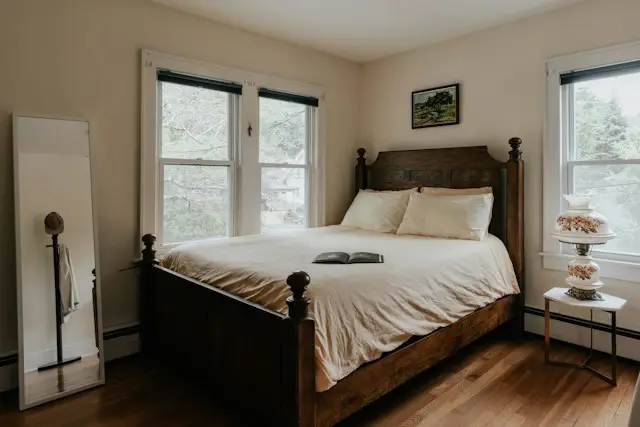
If you plan to move everything out of the property before it’s sold, one option is to use a property stager who can style the home for you. Research by the Home Staging Association found that 85% of property professionals surveyed believed staged homes sell up to three times faster than unstaged properties.
An entirely empty or excessively minimalist property can make it harder for buyers to understand how rooms work. Furniture provides scale and demonstrates that, for example, a bedroom comfortably accommodates a double bed or the dining room fits a six-person table. Think tidy, spacious and lived-in, rather than empty.
3. Fix the small things you've been ignoring
A new kitchen or bathroom might make your home more attractive, but that doesn't necessarily mean you'll recover what you spend on it. Buyers may also have completely different tastes and be looking for an opportunity to put their own stamp on a property. Before spending £15,000 replacing a kitchen, deal with the £50 jobs first. Walk around your property as though you were viewing it for the first time.
Look for:
- peeling or heavily marked paint on walls, skirting boards, stair banisters and windowsills
- dripping taps
- broken handles
- cracked sealant
- blown light bulbs
- loose cupboard doors
- damaged fencing
- overgrown gardens and where you can, improve kerb appeal with potted plants or tidying up weeds on the drive
- mould or condensation to remove in bathrooms and on windows
4. Make the property photographs count
For many buyers, the first viewing of your home isn't in person. It's on their phone. To give your home the best chance of standing out online spend time preparing the following before the photographer arrives:
- open curtains and blinds
- make beds properly
- clear kitchen and bathroom surfaces
- hide bins, laundry and cleaning products
- remove unnecessary pet equipment and children's toys and tidy the garden
You don't need to remove every family photograph or sign that somebody actually lives there. The objective is simply to stop personal possessions dominating the photographs.
Top tip
Don't accept poor photography simply because your agent has already uploaded it. If the rooms look dark, cramped or badly composed, ask for them to be retaken.
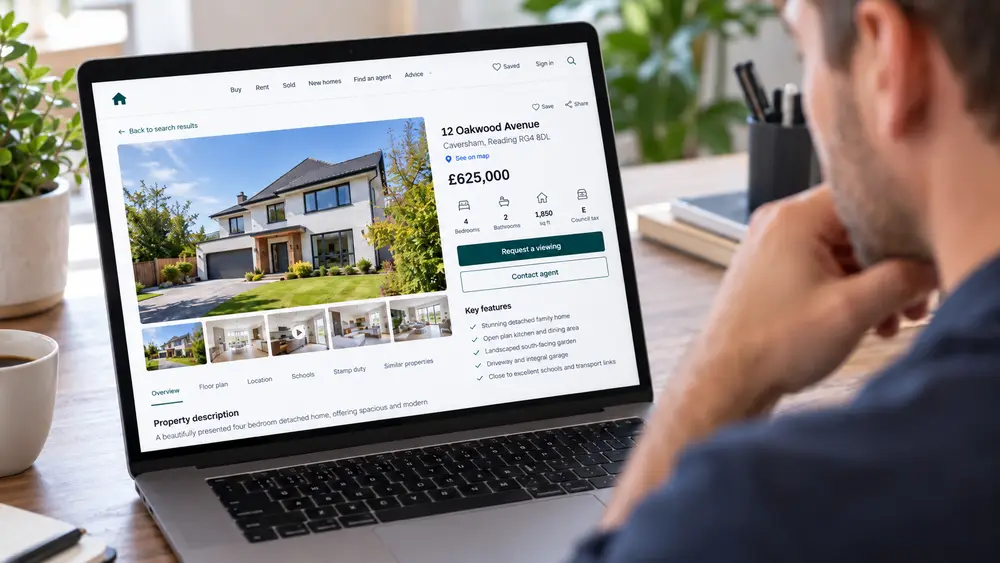
5. Check your Rightmove or Zoopla listing yourself
Don't assume everything in your listing is correct. Read it as though you were a buyer. Make sure important features haven't been missed and ensure the description highlights your property’s key differentiators. Important aspects to include are:
- a south-facing garden
- off-street parking
- a garage or annexe
- a vegetable patch
- a home office
- a recent extension
- an EV charger
- renewable energy sources, such as solar panels or a heat pump
- period features
- proximity to good schools, a station, local park or open countryside
6. Instruct a solicitor and prepare your paperwork early
Don't wait until you've accepted an offer to start thinking about conveyancing. Ask friends and family for recommendations of a good conveyancer. Ideally have one lined up ready to instruct when you put the property on the market. Read our helpful guide explaining the conveyancing process and what to be mindful of.
Begin gathering the documents the buyer's solicitor is likely to need ahead of time. The estate agent can highlight how prepared you are to prospective buyers, which could be seen as a bonus for buyers wanting a quick sale.
Depending on your property, the following documents would be useful to have ready for review:
| Document/information | When it might be needed |
|---|---|
| Energy Performance Certificate (EPC) | Most property sales |
| Title information | Required for all property sales |
| Planning permissions | For any extensions or alterations on the property |
| Building Regulations approvals | For any structural building work |
| FENSA/CERTASS certificates | For any replacement windows and doors |
| Boiler/service documentation | If available |
| Energy Performance Certificate (EPC) | Most property sales |
| Electrical certificates | If applicable for electrical work |
| Guarantees and warranties | Roofing, damp treatment, windows etc. |
| Party Wall Agreements | If applicable for any building work |
| TA6 Property Information Form | Most property sales |
| TA7 form | Leasehold properties |
| TA10 Fittings and Contents Form | Most property sales |
If you've extended the kitchen but can't find the Building Regulations completion certificate, discovering this before you accept an offer gives you time to investigate rather than holding up your buyer.
7. If you're selling a flat, get the leasehold information early
Flats can involve considerably more paperwork. Ask your managing agent or freeholder about obtaining the management information required for the sale and how long this normally takes. Key details to prepare for the sale are the lease length, current service charge, ground rent and details of any planned major works.
Depending on the building, buyers or their lenders may also need information relating to building insurance, fire safety and external walls. If an EWS1, FRA, FRAEW, Landlord's Certificate or Leaseholder Deed of Certificate exists for the building, acquiring copies early can prevent these becoming a last-minute problem. Our guide on EWS1 forms helps explain why this is important.
8. Listen to what viewers are telling you
One viewer disliking your wallpaper doesn't mean you need to redecorate. Six viewers raising the same concern deserves more attention. There is also an important distinction between not getting viewings and getting viewings but no offers.
Very little interest can suggest there is a problem with the price, photographs, listing or demand for that type of property. Plenty of viewings but no offers can suggest buyers like the property enough to investigate it, but something they discover during the viewing is causing them to change their mind.
Don't immediately reduce the price after one disappointing week, but don't ignore consistent feedback from buyers either.

9. Vet your buyer before accepting their offer
An offer is only useful if the buyer is actually in a position to proceed and complete the purchase. Ask your estate agent to establish the buyer's financial position and circumstances. For a buyer using a mortgage, this should include checking that they have an Agreement in Principle (AIP) and evidence of their deposit. If they claim to be a cash buyer, ask whether proof of funds has been provided.
You should also understand their position in the chain. A first-time buyer has no property to sell, whereas an existing homeowner may be dependent on their own sale, and potentially several other transactions further down the chain. This can cause significant delays or, in worst case scenarios, cause the sale to collapse.
Ask:
- Do they have a property to sell? If so, is it already under offer?
- How long is their chain?
- Do they have a mortgage Agreement in Principle?
- Has their deposit been evidenced?
- If they're a cash buyer, has proof of funds been provided?
- Have they instructed a solicitor?
- What timescale are they hoping to complete within?
Automatically assuming that the highest offer is the strongest option and overlooking the buyer’s commitment and readiness to proceed with the purchase, can be one of the most costly mistakes for sellers. For example, a buyer offering £390,000 presents a different set of risks from someone offering £400,000 who isn’t responsive or is in a chain.
Can you ask a buyer to pay a deposit?
In England and Wales, accepting an offer doesn't normally make the sale legally binding. Until contracts are exchanged, the buyer or seller can generally withdraw.
One way of introducing greater commitment earlier is a reservation agreement. Depending on the agreement, the buyer and seller commit to proceeding with the transaction and money may be paid or held as part of that commitment. There can be financial consequences if either party subsequently withdraws for a reason not permitted under the agreement.
Some estate agents use services such as Gazeal, which provides reservation agreements alongside upfront property information. Always read the terms of a reservation agreement carefully and take legal advice where appropriate: these arrangements aren't the same as exchanging contracts and the circumstances in which money can be retained or returned will depend on the agreement.
Auction is another option if greater commitment from the buyer is particularly important to you. More on this below.
10. Should you sell your property at auction instead?
Selling through an estate agent on the open market isn't your only option. An auction can be a particularly efficient way to sell your home where speed and greater certainty are more important to you than price. Unusual properties, renovation projects or probate sales are often the most suitable types to sell at auction.
Traditional auction
With a traditional property auction, the successful bidder normally becomes legally committed when the auction concludes and pays a deposit. Completion then takes place within the period specified in the auction contract, often considerably faster than an ordinary sale. Traditional auction can therefore significantly reduce the opportunity for a buyer to simply change their mind after winning the property.
However, there are trade-offs. You will need to agree a reserve price, fees may apply and there is no guarantee that bidding will reach the price you hoped for. The shorter completion timetable could deter buyers relying on conventional mortgage finance and therefore reduce your pool of potential purchasers.
Modern Method of Auction
Rather than exchanging contracts immediately when bidding finishes, the winning bidder typically enters into a reservation agreement and pays a reservation fee. There is usually a longer timeframe in which to progress towards completion, often around 56 days. This gives mortgage buyers more time to arrange finance and compete alongside cash buyers. Compared with a traditional auction, this can increase the number of potential buyers and encourage more competitive bidding, which can help you achieve a higher price.
Final thoughts
Minimising stress during the sale process and reducing the time it takes to complete requires a balance of realistic pricing, strategic presentation and early administrative preparation. When offers do arrive, consider a buyer's chain position and financial readiness alongside the price they are offering.
By addressing minor maintenance issues, maximising digital kerb appeal and organising your legal paperwork ahead of time, you reduce the friction that causes buyers to hesitate or renegotiate.
Ultimately, you do not need to create a flawless property. Your goal is to eliminate the unnecessary vulnerabilities that cause transactions to collapse, allowing you to move forward with confidence and certainty.